My first arrival in Bordeaux took place on a slightly cool evening. As the plane touched down, the view outside the window was bathed in a soft golden light—a hue reminiscent of wine aged in oak barrels: mellow, tranquil, and imbued with the depth of time.
Unlike the flamboyant energy of Paris, Bordeaux’s immediate impression is one of “slowness.” It is in no rush to reveal itself; rather, it resembles a glass of red wine that has just been allowed to breathe—inviting you to approach it gently and savor it slowly. The moment I stepped out of the airport, I didn’t even hail a taxi right away; instead, I stood by the roadside and took a deep breath. The air held a moist, sweet freshness—a scent that seemed to blend the fragrance of vineyards with the breeze drifting in from the river.
I knew then that this trip to Bordeaux was unlikely to be a typical “checklist-style” tour; instead, it promised to be a journey of recalibrating both my palate and my pace of life.
Strolling Along the Garonne: The City’s First Hint of “Tipsy Bliss”
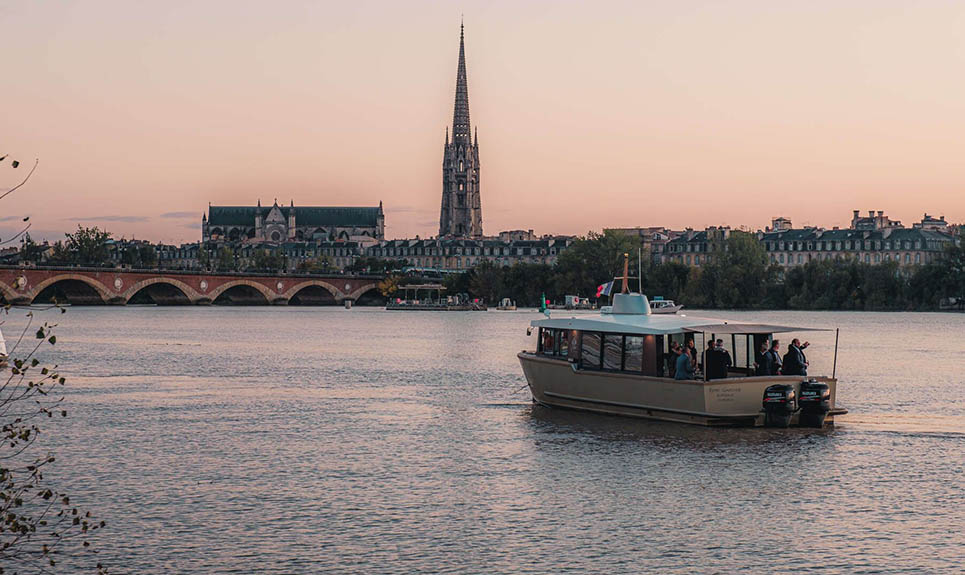
My first stop in Bordeaux was along the banks of the Garonne River.
The river was remarkably still in the evening light; its surface resembled gently smoothed silk, mirroring the city’s twinkling lights. The buildings lining the banks—clad in classic French limestone hues—glowed with a soft golden warmth under the setting sun.
I strolled leisurely along the riverbank with no specific destination in mind, simply moving to the rhythm of the crowd around me. Some people were jogging, others were walking their dogs, and some simply sat on benches, lost in thought. No one appeared to be in a hurry—a state of being that is a rare sight in a bustling metropolis.
I paused when I reached the Miroir d’eau (Water Mirror). The shallow sheet of water reflected the entire cityscape, while children ran and frolicked amidst the rising mist, their laughter echoing through the air. I stood there for a long time, taking few photographs, content simply to watch the interplay of light and shadow. In that moment, I suddenly understood why Bordeaux is so often hailed as a “city built for living.”
This is not a place for rushing through; it is a place for pausing.
Bordeaux Red Wine: Not Just a Beverage, but the Taste of Time
To visit Bordeaux without speaking of its red wine would be to miss out on truly entering the heart and soul of the city. My first glass of Bordeaux red wine was ordered at a small riverside bistro. There were no elaborate rituals, nor any lengthy introductions—just a simple glass of red wine, gently placed upon the table.
The liquid was a deep, purplish-red hue; beneath the lights, it shimmered like a flowing gemstone.
The first sip wasn’t a sudden “shock” to the palate, but rather a sensation that unfolded slowly: the fruit notes appeared first, followed by the structural presence of the tannins, leaving behind a finish that was ever so slightly dry, yet remarkably clean.
At the time, I knew nothing of vintages, châteaux, or classification systems; yet, in that very moment, I suddenly understood: red wine is not something merely to be drunk—it is something to be felt.
Later, I visited a small winery. The cellar was cool, and the air was scented with the aroma of oak barrels. My guide explained that the true allure of Bordeaux wine lies in its “balance”—not in any single flavor dominating the others, but in every element existing in perfect harmony.
Standing there in the cellar, a glass of freshly poured red wine in my hand, I gazed upon the silent rows of oak barrels and suddenly felt—profoundly—that here, time itself possessed a tangible weight.
Foie Gras: A Quintessential French Delicacy—Between Exquisite Taste and Ethical Controversy
On my second day in Bordeaux, I decided to try foie gras.
To be honest, I had felt somewhat hesitant about this dish prior to my arrival. On one hand, it stands as a classic icon of French gastronomy; on the other, it is frequently—and justifiably—embroiled in ethical debates. Yet, once seated in the restaurant, I decided to set aside my preconceptions and seek to understand it through the direct experience of tasting.
The restaurant was a small, traditional French bistro—furnished with wooden tables and chairs, its walls adorned with vintage photographs. When the waiter brought out the dish, it was presented as a hors d’œuvre—served cold, accompanied by toasted bread and fruit preserves.
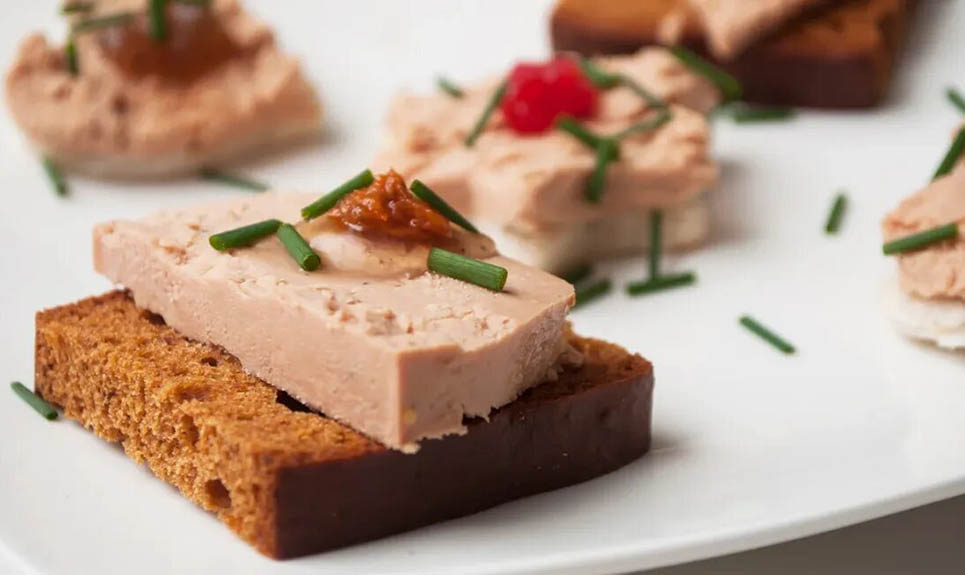
I cut off a small morsel and placed it in my mouth; the texture was incredibly delicate—requiring almost no chewing—and it simply melted away on my tongue. The flavor was rich and intense, yet never heavy, imbued with a silky, buttery richness and a subtle hint of sweetness.
Paired with a bite of the slightly tart fruit preserves, and accompanied by a piece of crisply toasted bread, the entire flavor profile suddenly coalesced into a perfectly balanced, complete sensory experience.
In that moment, I realized that the reason this dish remains a subject of such constant discussion lies not merely in the dish itself, but in what it represents: a quintessential “French culinary philosophy”—a relentless pursuit of the ultimate textural complexity and gastronomic experience. I didn’t rush to label it “good” or “bad”; I simply finished the meal in silence, then took a sip of red wine, allowing the flavors to slowly fade away.
Southwestern French Stew (Confit de Canard): The Warmth of Slow Cooking
The third dish that left a lasting impression on me was the Southwestern French Duck Confit (Confit de Canard).
On the menu, the dish didn’t appear particularly complex; yet, when it finally arrived at the table, it possessed a certain unpretentious power.
The duck leg had been slow-cooked over a gentle heat; the skin was faintly crisp and caramelized, while the meat itself was incredibly tender—so soft that a mere light stroke of the knife was enough to separate it. The accompanying side dish—typically potatoes or beans—had fully absorbed the aromatic essence of the duck fat.
My first bite came as a bit of a surprise: it wasn’t a flavor designed to be “stunning” or flashy, but rather a taste that was remarkably steady, grounded, and deeply satisfying.
It was only later that I came to understand the true essence of this dish: its core lies not in culinary technique, but in “time.”
Legend has it that the traditional method requires a prolonged period of low-temperature, slow cooking—allowing the duck meat to gradually tenderize within its own rendered fat—before it is preserved and subsequently reheated. This very process of “slowness” is, in itself, an integral part of the flavor profile.
That evening, seated by the window in the restaurant, I watched as the streetlights outside began to flicker to life, one by one. As I savored the duck confit alongside a glass of Bordeaux red wine, I was suddenly overcome by a peculiar sensation—not merely one of physical satisfaction, but rather a profound sense of inner peace and settledness.
The Wine Route: Stepping into the Heart of Bordeaux
On my third day in Bordeaux, I embarked on a short excursion to visit the local wineries.
As our vehicle left the city limits behind, the scenery gradually transformed into a vast tapestry of vineyards. Rows of lush green vines stretched out in perfect alignment, reaching all the way to the distant horizon.
Our guide explained that some of these vineyards have existed for centuries—perhaps even longer. The interplay of distinct soil compositions, climatic conditions, and grape varietals, he noted, collectively determines the unique character of every bottle of wine.
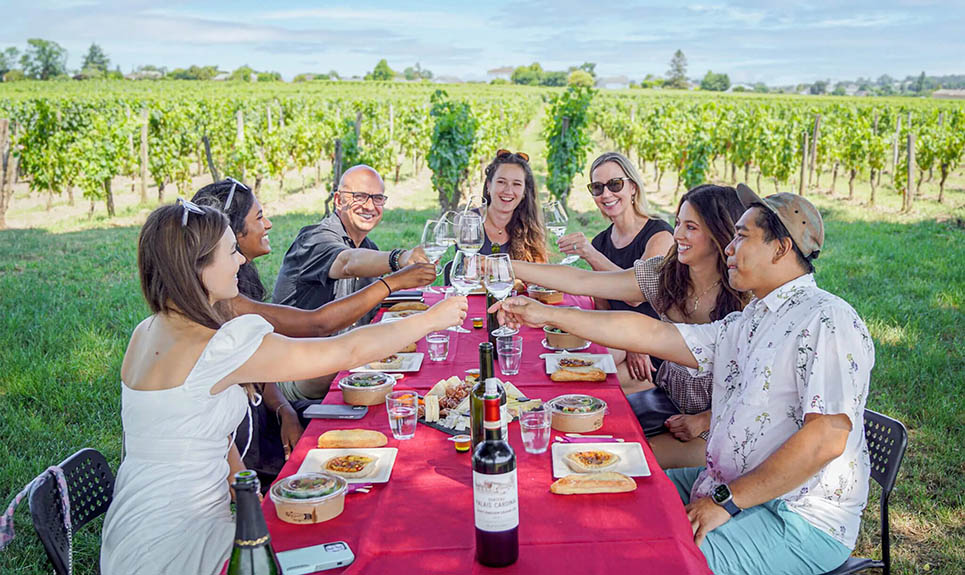
As I stepped inside one of the wineries, the sunlight streamed in at just the right angle. Oak barrels were stacked neatly within the cellar, filling the air with an intoxicating blend of wood and wine aromas.
The wine-tasting session took place beside a small wooden table, flanked on one side by the vineyards visible through the window, and on the other by the red wines that had just been allowed to breathe.
It was then that I began to realize: the true allure of Bordeaux lies not merely in the act of “drinking wine,” but in the deeper experience of “understanding how wine is born.”
A City Where Time Slows Down
On the day I left Bordeaux, I didn’t rush my itinerary; I simply made my way to the banks of the Garonne River one last time.
The city was quiet in the early morning; the Water Mirror Square was nearly deserted, save for the gentle breeze drifting through.
Sitting on a bench, I reflected on my experiences over the past few days: the layered complexity of the red wine, the delicate richness of the foie gras, the comforting warmth of the Southwestern duck stew, and that pervasive, unhurried pace of life.
Bordeaux does not attempt to captivate you with sheer “spectacle”; rather, it seems to gradually—little by little—alter the speed at which you view life.
As I departed, I suddenly realized that the city’s most unique quality lies not in any specific dish or glass of wine, but in its ability to make one willing to slow down.
And that feeling—that sensation—lingers far longer than any taste.