For many who visit France, the first images that come to mind are the romance of Paris, the bustling grandeur of the Champs-Élysées, or the artistic treasures housed within the Louvre. Yet, upon my first visit to Nice, I discovered that this city—nestled along the French Riviera—offers far more than just intoxicating sea views; it also harbors a culinary culture that is truly unforgettable.
For me, one of the most delightful aspects of travel is getting to know a city through its food. Behind every local specialty lies a unique history and a distinct way of life. And Nice, in particular, is a city that knows how to tell its story through flavor.
During my few days here, I spent nearly every day wandering through the narrow alleys of the Old Town, dining at seaside restaurants, and browsing through bustling local markets. The sunshine, the sea breeze, and the exquisite food all intertwined to make this journey an exceptionally memorable one.
My First Encounter with Salade Niçoise: The Mediterranean Soul in Simple Ingredients
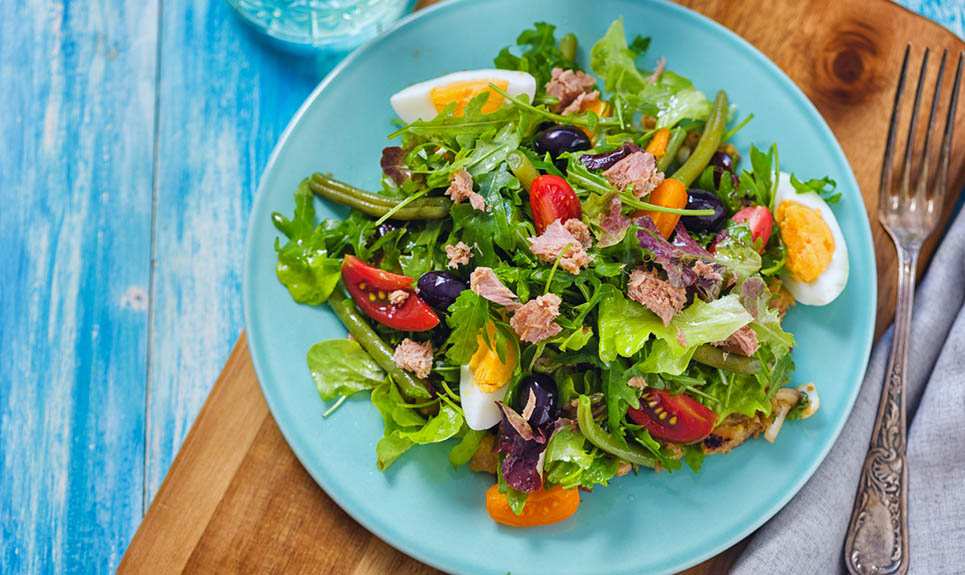
On my very first day in Nice, while exploring the Old Town, I had the pleasure of tasting the city’s most iconic local delicacy: the Salade Niçoise.
To be honest, before coming to France, I had always assumed that salads were merely a choice for dieters—simple, plain, and uninspiring. But the moment the waiter placed this dish before me, my preconceptions vanished instantly.
Arranged on the plate were vibrant red tomatoes, crisp green lettuce, black olives, hard-boiled eggs, tuna, and anchovies—a rich palette of colors resembling a vivid oil painting.
I gently lifted a piece of tomato with my fork and brought it to my lips.
That natural sweetness, mingling with the fragrant aroma of olive oil, instantly burst forth in my mouth.
Unlike the salads I was accustomed to eating, the Salade Niçoise relies on virtually no complex seasonings; instead, it allows the inherent freshness and deliciousness of the ingredients themselves to shine through.
I later learned that this dish originated among the local fishing families of Nice. In days gone by, people would simply combine the most basic and readily available ingredients—never imagining that this humble creation would eventually evolve into a world-renowned culinary classic.
At “Le Safari”—a celebrated restaurant located in Nice’s Old Town—I enjoyed a second, even more traditional rendition of the Salade Niçoise.
Fresh flowers adorned the restaurant’s entrance, while the outdoor terrace seating was filled with diners and travelers from every corner of the globe. As I savored my salad while watching the street performers—with the melody of French songs drifting into my ears—I felt as though I had truly immersed myself in the daily life of the people of Nice.
Sometimes, a seemingly ordinary dish is precisely what best captures the true spirit of a city.
And the Salade Niçoise is just such a dish.
Simple, natural, sun-kissed, and full of vitality.
Provençal Roasted Vegetables: The Taste of Condensed Sunshine
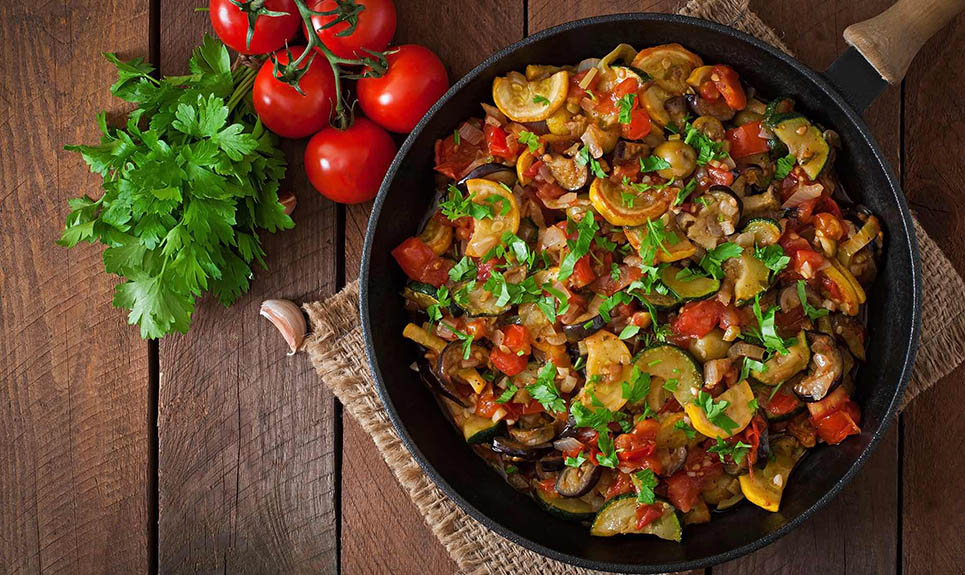
The following lunchtime, at a traditional family-run restaurant, I tasted Provençal roasted vegetables—or Ratatouille—for the very first time.
Thanks to the animated film Ratatouille, this dish is familiar to many; yet, it wasn’t until I tasted the authentic version that I truly understood why it has become one of the most classic home-style dishes in the South of France.
The waiter explained that the dish is prepared using a variety of fresh vegetables, including zucchini, eggplant, tomatoes, bell peppers, and onions.
All the ingredients are slow-simmered together, allowing the distinct aromas of each vegetable to meld into a harmonious whole.
The moment it was placed before me, the rich, heady scent of tomatoes wafted up to greet me.
With the first bite, the natural sweetness of the vegetables unfolded in layers upon my palate.
There was no heavy cream, no complex sauces—only the pure, Mediterranean flavors imparted by olive oil and fresh herbs.
In that moment, I suddenly grasped the culinary philosophy of the people of Southern France.
What they seek is not extravagance, but rather a deep respect for the ingredients themselves.
The restaurant owner was a gentleman in his sixties.
Seeing how much I was enjoying my meal, he smiled and told me: “True Ratatouille isn’t haute cuisine; it is the taste of a grandmother cooking for her family.”
His words left a lasting impression on me.
Often, the most moving experiences during a journey are not found in the exquisite plating of a Michelin-starred restaurant, but rather in those traditional dishes that carry within them the memories of family and the essence of local culture.
As I stepped out of the restaurant, the sunshine remained bright and radiant.
I strolled along the cobblestone streets of Nice’s Old Town, where the scent of freshly baked bread and coffee hung in the air.
The taste of those Provençal roasted vegetables seemed to have become, in that moment, an integral part of this city’s warm and cherished memories.
The Côte d’Azur Seafood Soup: A Treasure Gifted by the Mediterranean
If the Salade Niçoise represents the sunshine, then the Côte d’Azur Seafood Soup—or Bouillabaisse—represents the Mediterranean Sea itself. On the evening of my third day, I made a special trip to a seafood restaurant near the Port of Nice—a spot deeply cherished by the locals.
As night fell, the lights from the yachts moored in the harbor shimmered across the water’s surface.
The restaurant was packed with diners, and the air was thick with the enticing aroma of seafood mingling with spices.
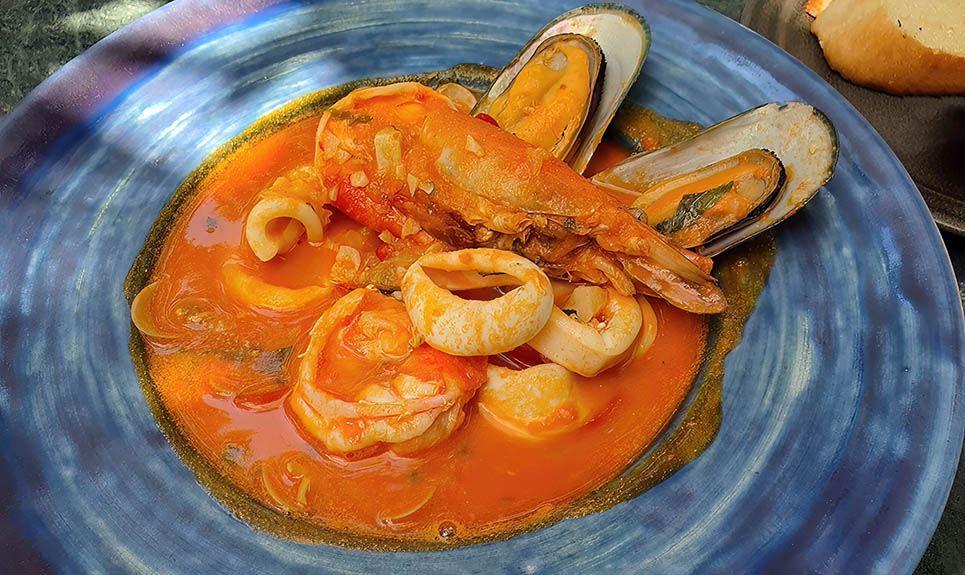
When the waiter brought over the pot of seafood soup, I was immediately captivated by its rich, vibrant hue.
Floating within the golden-hued broth was an assortment of fish, shellfish, shrimp, and crab.
Legend has it that this dish originated with the local fishermen.
In days gone by, fishermen would simmer together the small fish they couldn’t sell that day, adding saffron, garlic, and herbs to create what eventually became this classic culinary masterpiece.
I took a sip of the broth first.
It was rich yet not greasy, with layers of savory flavor unfolding one after another.
The natural sweetness of the fish, the fragrance of the spices, and the distinctive notes of saffron blended together in perfect harmony.
Paired with toasted bread and a dollop of garlic aioli, the experience gained an even greater depth of flavor and texture.
That dinner lasted for over two hours.
Outside the window lay the tranquil, moonlit harbor, while soft music drifted gently in the background.
I slowly savored every morsel of seafood, relishing this rare moment of unhurried leisure.
Perhaps the greatest charm of travel lies precisely in these simple yet precious moments.
Culinary Discoveries at the Market
Beyond the restaurants, the markets of Nice proved to be just as delightful a surprise.
One early morning, I made my way to the Cours Saleya Market.
It was a bustling hub filled with a vibrant array of fresh produce and local delicacies.
Stalls were piled high with colorful fruits, freshly baked breads, olive products, and a wide variety of aromatic spices.
I purchased some local olives and cheese, then sat down at the edge of the square to slowly savor them.
All around me, stallholders bustled about their business while locals chatted idly.
Unlike tourist traps, this place lacked any contrived packaging; instead, it exuded the authentic, vibrant spirit of everyday life.
I realized then that gastronomy is never merely about satisfying one’s hunger.
It serves, rather, as a window—offering a glimpse into a city’s history, its culture, and the warmth of its people.
Leaving the Taste of Nice in My Memories
The day before my departure from Nice, I returned once more to the seaside.
Sunlight spilled across the Mediterranean, and in the distance, gentle waves lapped softly against the shore. I suddenly found myself recalling every exquisite dish I had savored over the past few days.
The fresh, natural essence of the Salade Niçoise; the warm, rustic simplicity of the Provençal roasted vegetables; the rich, savory depth of the Côte d’Azur seafood soup—together, they form my most profound memories of this city.
Perhaps years from now, I may forget the name of a particular street or the specific details of a certain landmark.
Yet, the flavors I once tasted—along with the image of sitting in a seaside restaurant, watching the sun slowly dip below the horizon—will remain etched deep within my memory.
And this, precisely, is the most enchanting aspect of Nice.
It possesses not only landscapes that stir the soul, but also flavors so unforgettable that one simply cannot bear to let them fade away.